BDA, DAS and ERRCS
An in-building public-safety radio system takes the fire and police radio signal from outside and repeats it through the building, so responders can talk to each other and to command from any floor. Codes call it an emergency responder radio coverage system (ERRCS) or an emergency responder communication enhancement system (ERCES). The industry usually names it by its parts: the BDA and the DAS.
Where the signal drops out, and how a system fixes it
Radio signals weaken every time they pass through a wall or a floor. Here is one building as a system goes in, part by part.
Before
Without a system
The radio site's signal reaches the outside of the building. Concrete, steel and the levels below grade cut it off inside.
Part 1 of 5
Donor antenna
A directional antenna on the roof, aimed at the public-safety radio site. It sends and receives for the whole building.
Part 2 of 5
Bi-directional amplifier (BDA)
In a riser or equipment room, the BDA boosts the signal coming in from the radio site and the signal going back out from responders' radios.
Part 3 of 5
Antennas on every level (DAS)
Ceiling antennas fed by cable or fiber up the riser repeat the signal into corridors, stairs and garages. Together they are the distributed antenna system.
Part 4 of 5
Monitoring
The system reports its own faults to the fire alarm panel, such as an amplifier failure, a low battery or a loss of AC power.
Part 5 of 5
Backup power
A battery, or a battery and the building's generator, keeps the system on the air when the power fails. NFPA 1225 (2022) calls for 12 hours at full capacity.
The parts of a system
Donor antenna
A directional antenna on the roof, aimed at the public-safety radio site. It is the building's link to the outside system, sending and receiving for every floor.
The design has to keep the donor antenna isolated from the antennas inside, so the amplifier doesn't feed back on itself. NFPA 1225 lists donor-to-DAS isolation calculations among the plans a system needs.
Bi-directional amplifier (BDA)
The signal booster, usually in a riser or equipment room. It amplifies the signal coming in from the radio site and the signal going back out from responders' radios.
NFPA 1225 (2022) requires these components to be listed to UL 2524. Broadband (Class B) signal boosters must also be registered with the FCC before use.
Antennas on each floor (DAS)
Small ceiling antennas that rebroadcast the signal inside: corridors, stairs, elevator lobbies, garages. Together they form the distributed antenna system.
Placement comes from predicted coverage drawn on your floor plans, then gets confirmed by testing after installation.
Cable and fiber
Coaxial cable, splitters and couplers carry the signal from the amplifier up and down the riser and out along each floor. Larger buildings may use fiber to remote units instead.
Where the fire marshal requires it, the design also covers how the cable pathways survive a fire.
Monitoring
The system reports its own faults to the building's fire alarm system, and an annunciator in the fire command center shows the status of each active component.
NFPA 1225 lists the supervisory signals: signal source malfunction, amplifier or active component failure, low battery, loss of normal AC power and battery charger failure.
Backup power
A dedicated battery, or a battery plus the building's generator, keeps the system running when the power goes out.
NFPA 1225 (2022) calls for 12 hours at 100 percent system operation, or a 2-hour battery with a generator that can carry the full load for 12 hours.
Figures and requirements in this section: NFPA 1225 (2022 edition), chapter 18, and 47 CFR 90.219. Which edition applies to your building is your fire marshal's call. Sources
How coverage is tested
A system is accepted on a grid test, and the same test is repeated every year. Each floor is split into a grid, typically 20 roughly equal areas, and radio quality is checked at the center of each one, so each area stands for about 5% of the floor. Quality is measured as delivered audio quality (DAQ). Critical areas are tested separately. Your fire marshal sets the procedure.
Before: no system
After: BDA and DAS installed
Share of the floor that passes
- 90%
- General building areas under NFPA 1221 (2019), the edition Florida's current fire code references. NFPA 1221 §9.6.7.4
- 95%
- General building areas under NFPA 1225 (2022). NFPA 1225 §18.8.4
- 99%
- Critical areas under both editions, such as exit stairs, elevator lobbies and the fire command center. Tested separately. 1225 §18.8.3; 1221 §9.6.7.3
- 3.0
- The least delivered audio quality (DAQ) an area may have, in both directions. NFPA 1225 §18.9
Illustration of one apartment floor. Not a real building or test result.
Why it matters to the people inside
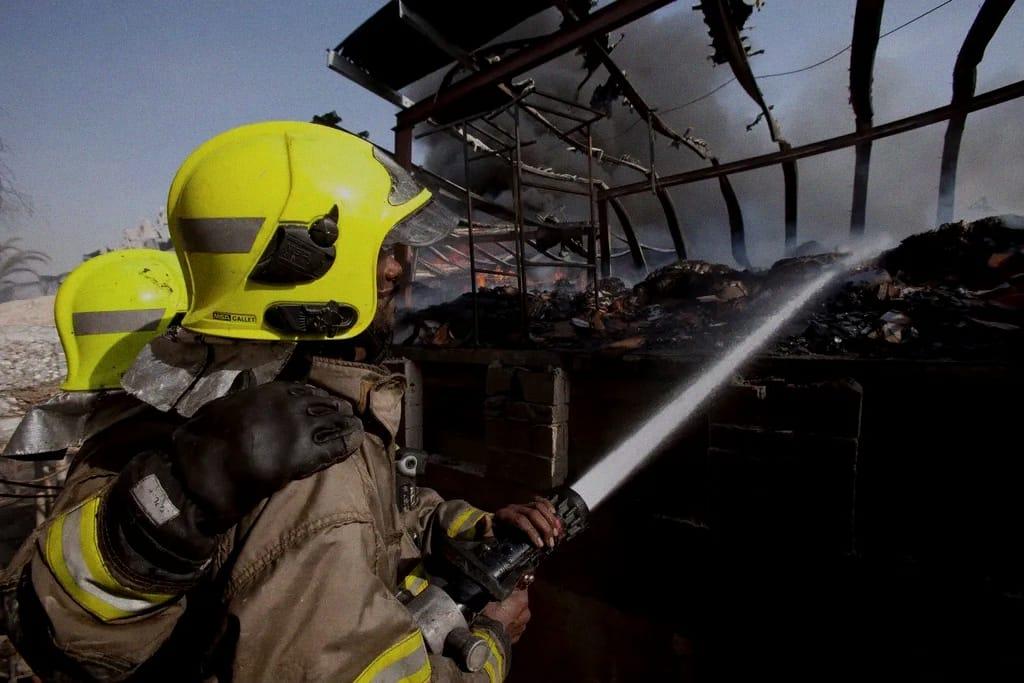
Each firefighter carries a radio. It is how a crew stays in touch when it gets separated, how information gets out fast, and how a firefighter who is hurt calls for help: radio systems can give an emergency call priority at the push of a single button. None of that works where the signal doesn't reach.
After NFPA 1225 (2022), annex A.18.8.
What gets in the way
- Concrete and masonry
- Steel framing and metal roofs
- Low-E and tinted glass
- Stairwells and elevator cores
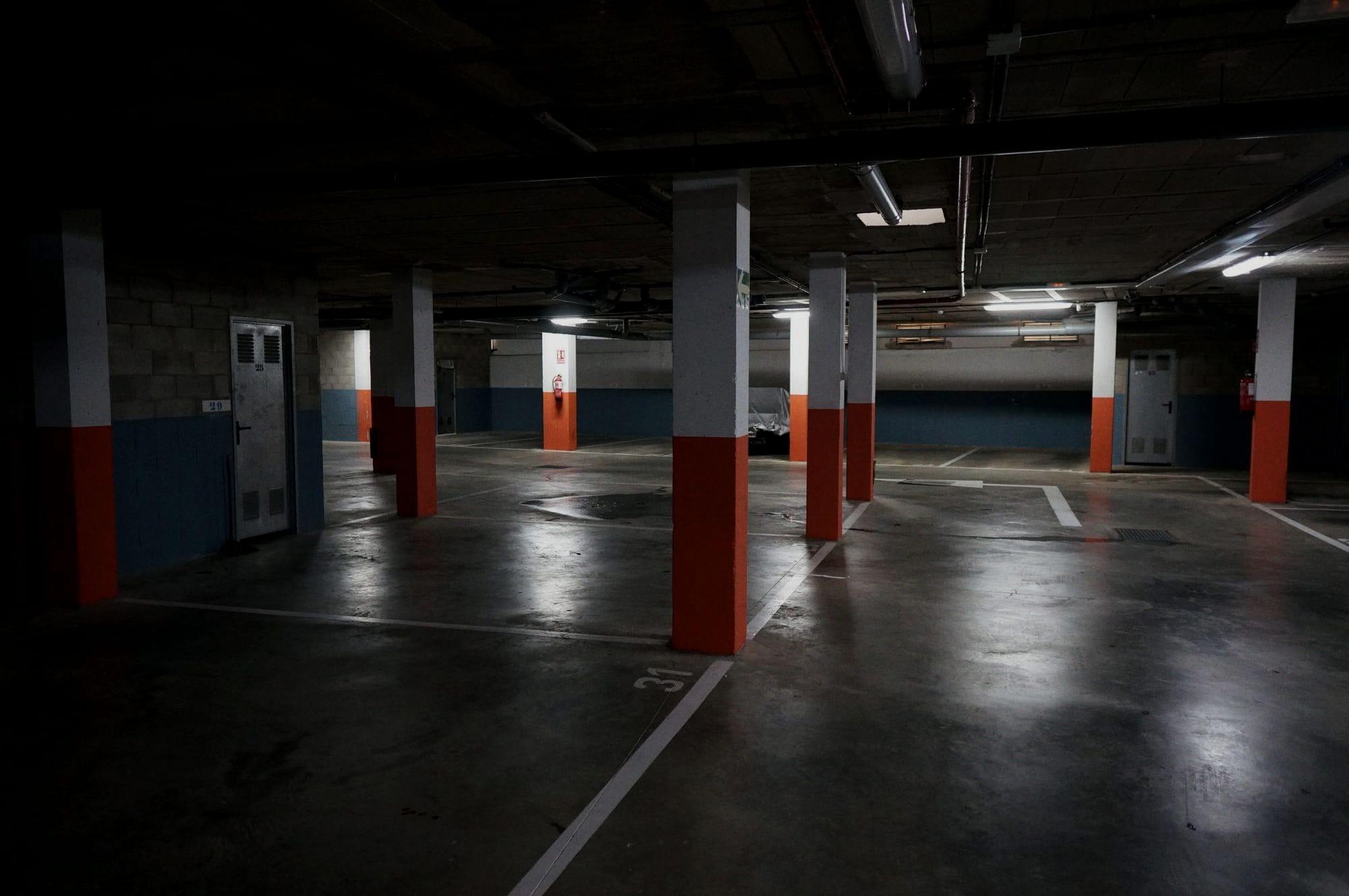
- Parking garages and basements
- Tunnels and other below-grade areas
Words you'll hear
- AHJ
- Authority having jurisdiction. For these systems in Florida, usually the local fire marshal.
- DAQ
- Delivered audio quality, a 1 to 5 scale for how well speech comes through. At DAQ 3, speech is understandable with slight effort and occasional repetition. NFPA 1225 requires at least DAQ 3.0 in both directions.
- Downlink and uplink
- Downlink is the radio site talking to a responder's radio. Uplink is the responder's radio talking back.
- Critical areas
- Places responders must be able to talk from, such as the fire command center, fire pump room, exit stairs, exit passageways, elevators, elevator lobbies, standpipe cabinets and sprinkler valve locations. They are held to a higher coverage percentage.
- Frequency license holder
- The agency licensed by the FCC to use the radio channels the system amplifies. Its written authorization is required before the system is switched on.
- Grid test
- The acceptance and annual test: each floor is divided into a grid and radio quality is checked in every cell.
To find out how your building does, request a signal survey.